Offer and aim
Who exactly buys, and what makes them put a hand up.
- ICP and offer agreed in writing
- Landing page that speaks to one buyer
- First campaigns live, tracking proven
Industry · B2B
“MQLs” are a marketing invention. We’re judged on qualified enquiries and the dollar value of pipeline they create — reported in the same numbers your sales team already argues about.
Sound familiar?
Every B2B founder we talk to has at least two of these scars.
The scoreboard
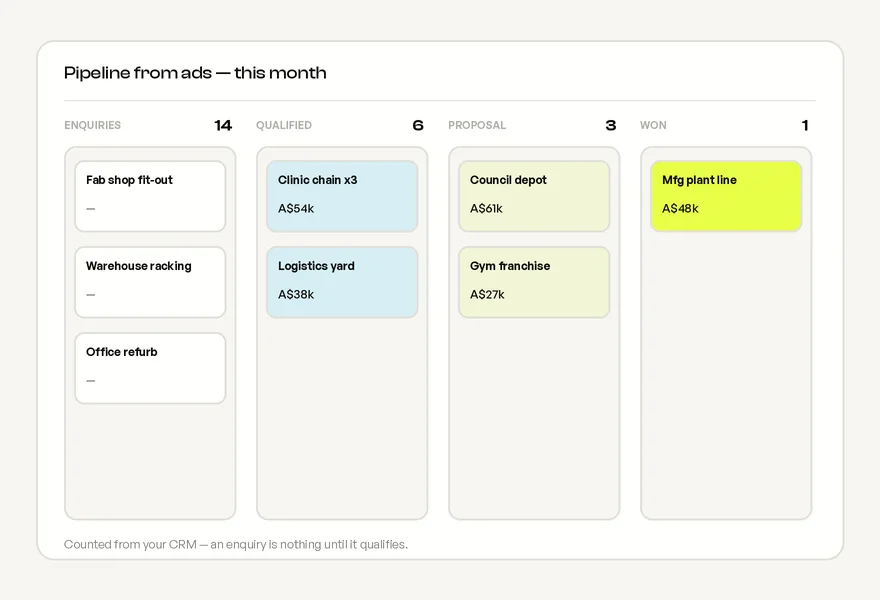
Every enquiry lands in the pipeline with a dollar value and moves — or doesn’t. The monthly report reads straight off it: 14 enquiries, 6 qualified, 3 proposals, 1 won. No vanity layer in between.
The first call
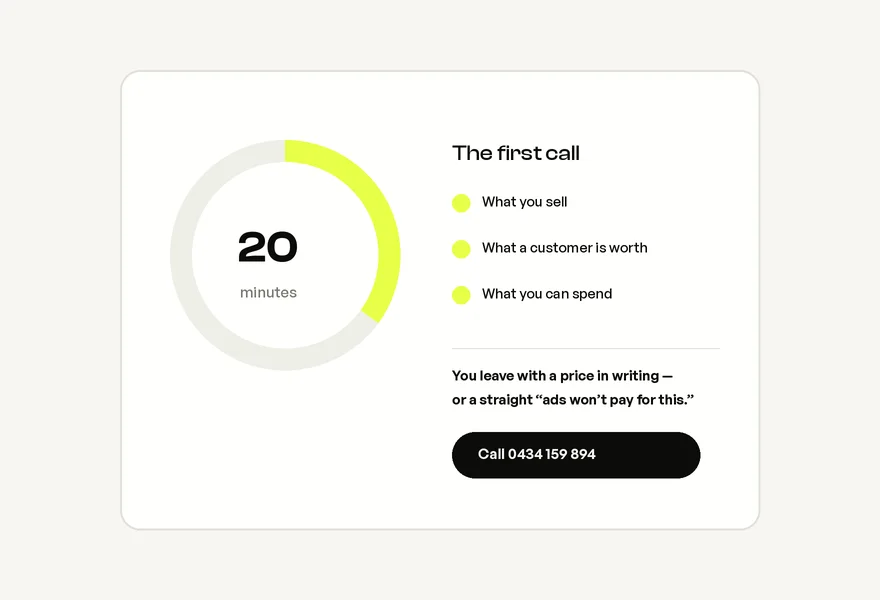
Average deal, close rate, margin — that’s all we need to price an enquiry. If a qualified enquiry is worth A$900 to you and ads can buy one for A$250, that’s a business case. If they can’t, you hear it on the call.
The first ninety days
B2B cycles are long. Anyone promising closed deals by day 30 is lying to you — here’s what’s real.
Who exactly buys, and what makes them put a hand up.
Volume first, then the qualification screws tighten.
Deals may still be cooking — the pipeline shows it.
Save yourself a call
B2B only pays when the unit maths works. We check yours before either of us spends anything.
A good fit
Most of these true? The maths usually clears.
A bad fit
We’d rather lose the fee than waste your quarter.
What it costs
Never a percentage of your ad spend. The typed price is the price.
Google, Meta, TikTok and search
A$1,990 a month fixed. On a A$20,000 average deal, the year’s fee pays for itself with the second won deal — and every enquiry after that is margin.
Before you decide
The questions owners ask before they hire an agency, answered straight.
By stage movement, in dollars. You see enquiries created, qualified and sitting in proposal each month — so the pipeline is visibly filling long before deals close. Judging ads on closed-won in month two is how agencies get fired unfairly, and how bad ones hide.
Whichever your buyer uses when they have the problem. High-intent search usually comes first because it catches demand that already exists; LinkedIn earns its budget when the maths proves the search channel out. The scope names the channels before anything spends.
Sometimes no — and we’ll show you the search volume on the call and say so. Small niches often work better with fewer, bigger bets: one strong offer, one page, retargeting the trickle that exists.
No. Month to month, leave with the account, the data and every asset. We ask for ninety days before you judge it — in B2B that’s one honest cycle, not a contract trick.
Call or text
Melbourne, Victoria. Or send the form and the team replies by phone or email, the same business day.